
Gifts · Has everything
For the people who already have everything
The search that brought you here is a complaint: they need nothing, want nothing, return everything. Correct on all counts — because the category they're missing isn't sold anywhere. It's in your family's photo boxes.
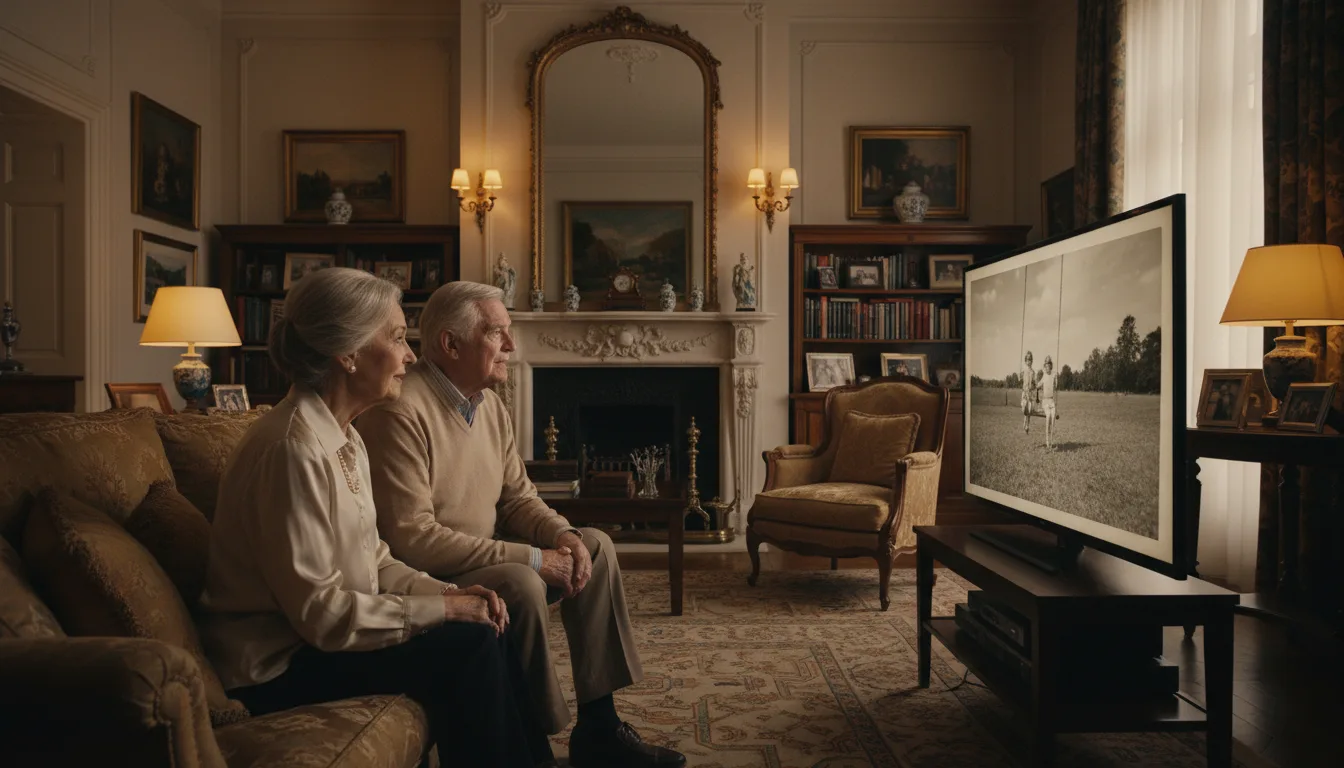
People who have everything have everything *purchasable*. Their unmet gift category is the unpurchasable: their own past, the faces they miss, the years that made them — returned as something they can watch.
The economics of the impossible recipient
“They have everything” is a market analysis: this person’s purchasing power has cleared the shelves of anything you could contribute. Competing inside that market — a nicer version of a thing they own — is unwinnable and they know it politely.
The move is to exit the market. Assets they can’t buy at any price: their childhood in color, their parents’ faces in motion, their wedding day breathing again. Those exist only in the family archive, unlisted and appreciating — and converting them into a watchable gift costs nearly nothing but assembly.
Their real scarcity
At the have-everything stage of life, the scarce resources are behind, not ahead: people gone, houses sold, decades compressed into boxes of prints. A memory video doesn’t reverse any of that — no honest product claims to. What it does is small and specific: it lets them watch, for a few seconds at a time, what they can otherwise only recall. Judging by what customers report, those seconds are the whole gift.
How it works
- 1Skip the stores entirely. Your materials: 3–10 photos from their life, wherever they're hiding.
- 2Restore and colorize free. Their oldest, most 'un-giftable' damaged photos become the centerpiece.
- 3Animate. The one thing their money hasn't bought: their 1970 selves, moving.
- 4Premiere it. For once, watch the un-surprisable get surprised.
Outside the economy
It can't be price-checked, upgraded, or already-owned. The usual defenses of the person-who-has-everything simply don't apply.
Made of what they actually lack
Time with the people in the photos is the one shrinking asset at that stage of life. Motion gives seconds of it back.
Effort they can verify
They know what gathering fifty-year-old photos involves. The gift's price tag is invisible; its attention tag is not.
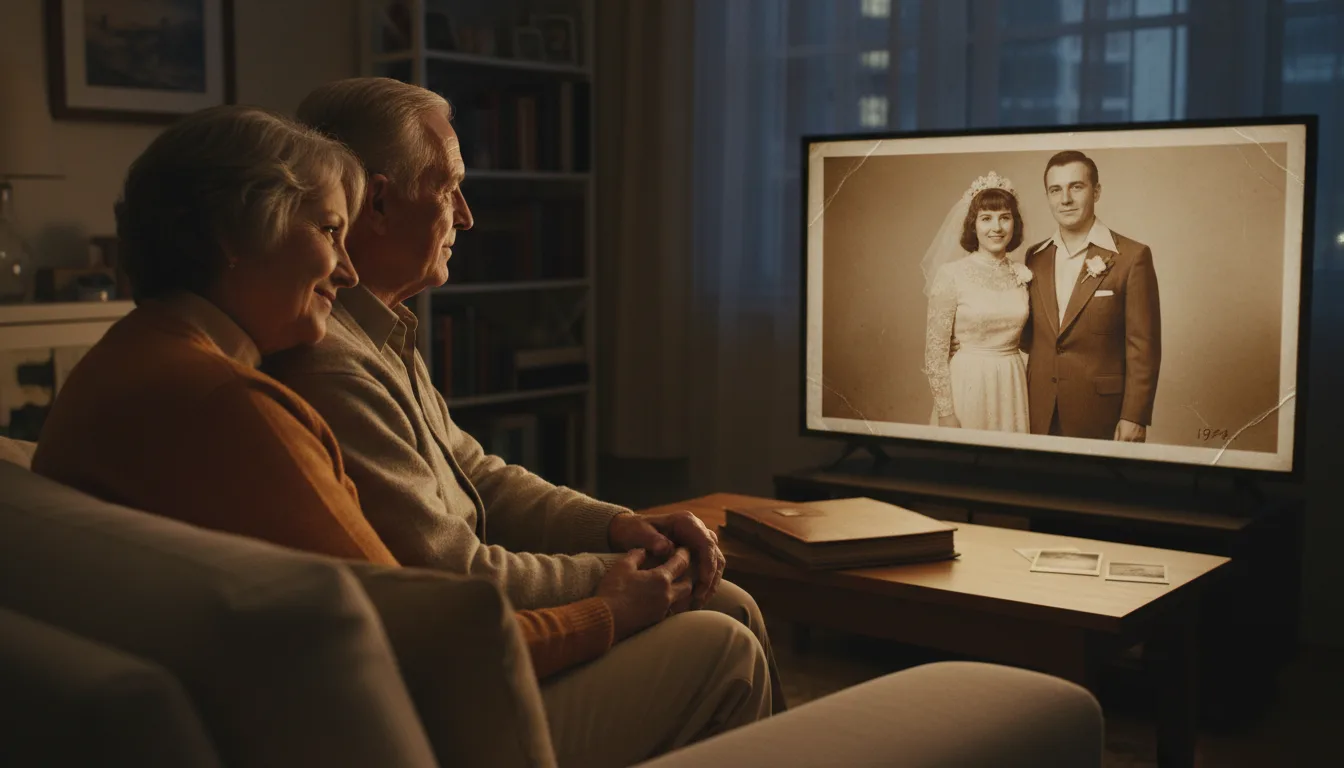
Example: the father-in-law problem
Imagine a father-in-law with every tool, vintage, and gadget already owned — the man for whom gift cards were invented. This year: eight photos sourced from his sister (childhood on the farm, the navy years, his wedding, his first shop), restored and animated, scored with the doo-wop he still hums. He watches it twice in silence, then starts telling stories nobody in the room has heard. The problem was never that he had everything — it was that no one had asked about the farm.
Hypothetical, and adaptable to whichever un-giftable person you're assigned.
Tips for the best result
- Go one contact past the obvious: their siblings and oldest friends hold photos even they have never seen.
- The damaged photos they'd never display are ideal — free restoration turns 'ruined' into 'reborn.'
- Aim the video at their missing people — parents, old friends, first houses. That's the unpurchasable core.
- Keep the reveal small: these land harder in a quiet room than at a loud party.
- Follow with prints of the restored photos — a physical trace of the digital gift.