
Gifts · Long distance
A gift that crosses any distance
Oceans complicate everything about family — except this. A memory video made from your shared photos travels at the speed of a message and arrives carrying home.
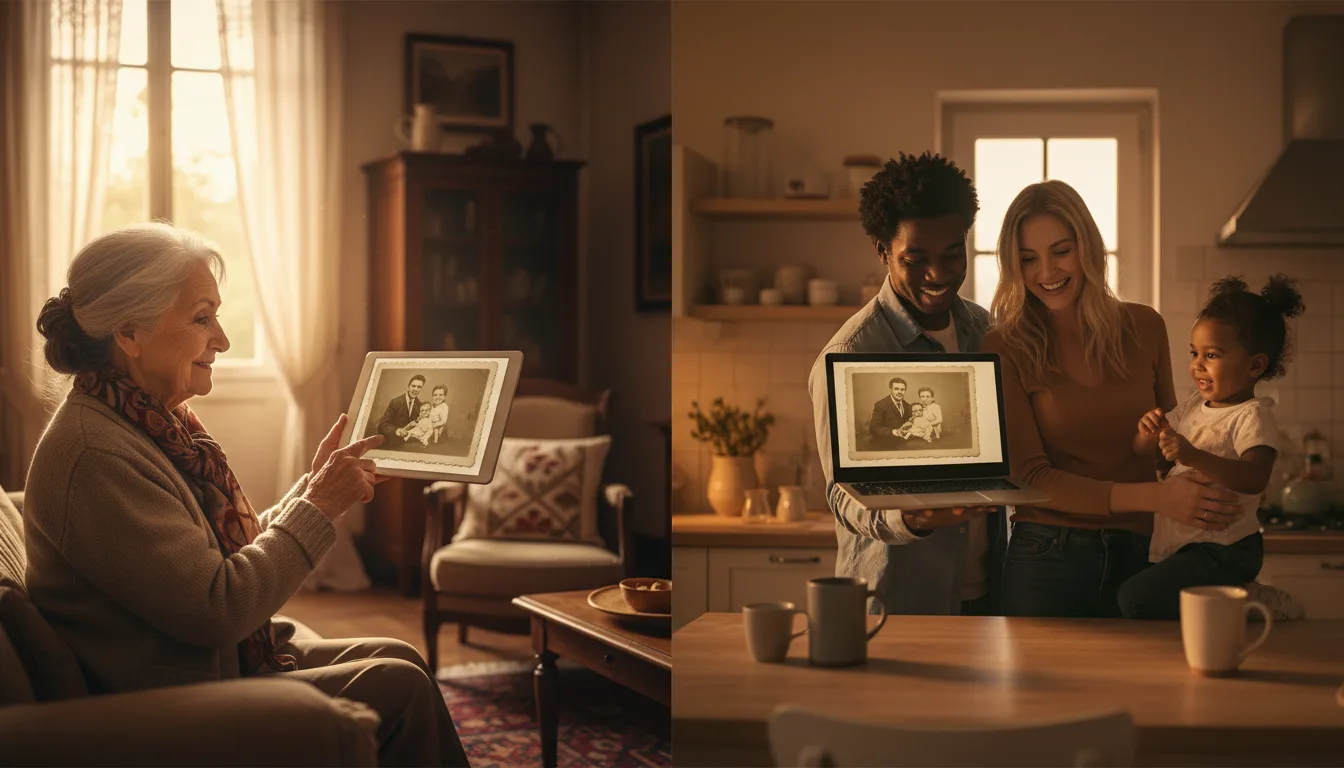
Distance gifting usually means choosing between expensive shipping, generic delivery services, or a transfer that says nothing. The family archive solves it: the most personal gift you can give is also the one that emails.
What distance does to family archives
When families spread across borders, the photo archive fragments with them: grandmother’s albums stay in the old country, the emigrating generation carries a hurried selection, and the grandchildren grow up with almost nothing older than themselves. Each household holds pieces; nobody holds the picture.
A memory-video project quietly reverses this. The collecting phase — cousins photographing prints in three kitchens on two continents — reassembles the archive as a side effect. The video is the occasion; the pooled, restored collection is the inheritance.
The delivery is a feature, not a compromise
It’s tempting to treat digital delivery as second-best — the thing you do because shipping failed. For this gift, the opposite holds. A package arrives once; a link arrives everywhere at once, plays at the birthday in one country and the Sunday dinner in another, and never gets held at the border. The most-shipped things between scattered families are photos of each other. This is that, perfected: the old photos, moving, with the song from home.
How it works
- 1Gather photos across households. The group chat and relatives' phone rolls are a distributed archive — collect 3–10.
- 2Restore and colorize free. Photos of the old country, old house, old faces — repaired at no cost.
- 3Animate and add music. A song from home does heavy lifting across a distance.
- 4Send the link — or premiere on a call. Watching together over video chat turns delivery into an event.
Nothing to clear customs
No forms, no fees, no three-week estimates. The gift arrives the moment you send it, intact, anywhere.
Shared history, reassembled
Emigration scatters photo archives across continents. The video is an excuse to pool them — and the pooled archive outlasts the occasion.
Made for the family call
Two minutes of moving photos gives the weekly video call its best two minutes in years.
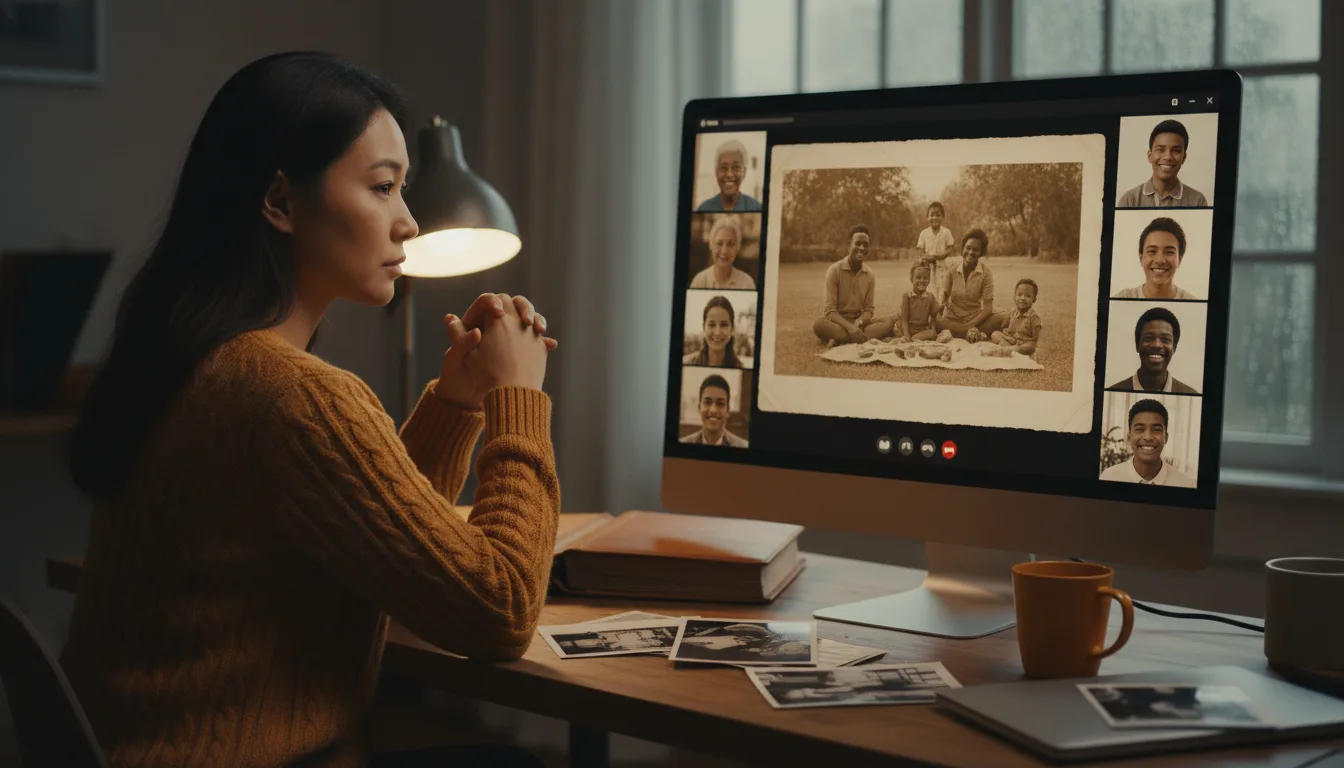
Example: a birthday across nine time zones
Imagine a mother in Kyiv, a daughter in Toronto, and a birthday neither can attend. The daughter collects photos from cousins across three countries: her mother's childhood courtyard, the wedding, the kitchen of the old apartment, grandchildren she's only held twice. Restored, animated, scored with a song in her own language. It arrives as a link at 7 a.m. her time. The call that follows lasts two hours.
Hypothetical — though our reviewers from Ukraine, Thailand, Brazil, and South Korea suggest the pattern is global.
Tips for the best result
- Crowdsource photos with a specific ask: 'your three best photos of Mom' outperforms 'send old photos.'
- Include the places — the house, the street, the shop — not just the faces. Distance makes geography emotional.
- Music in the family's first language, from the era they left, lands hardest.
- Schedule a watch-together call rather than just sending the link; the shared reaction is half the gift.
- Send the restored stills afterward as a follow-up gift — every household gets the archive.