Guide · Preserve
How to store physical photos safely
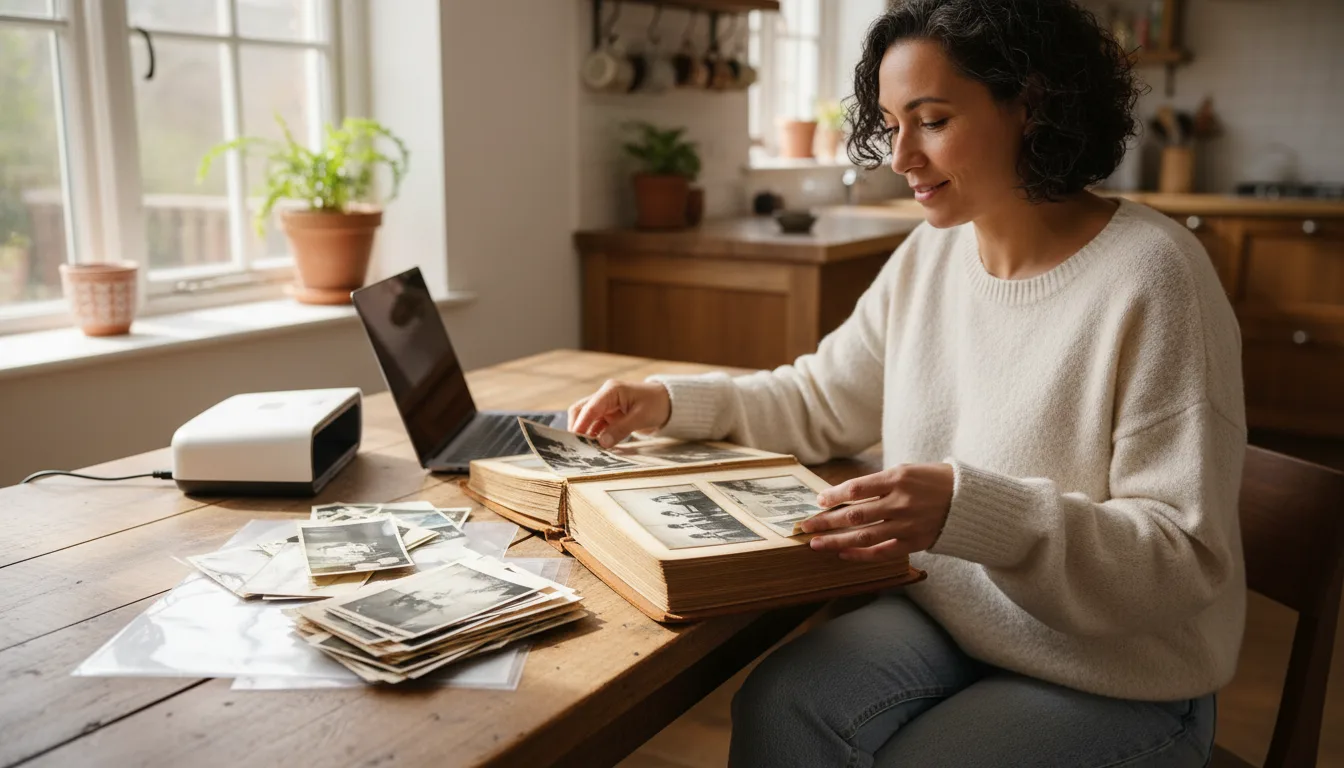
Even after you digitize, the original prints are worth protecting. Here's how to store physical photos so they age as slowly as possible — the right place, materials, and handling.
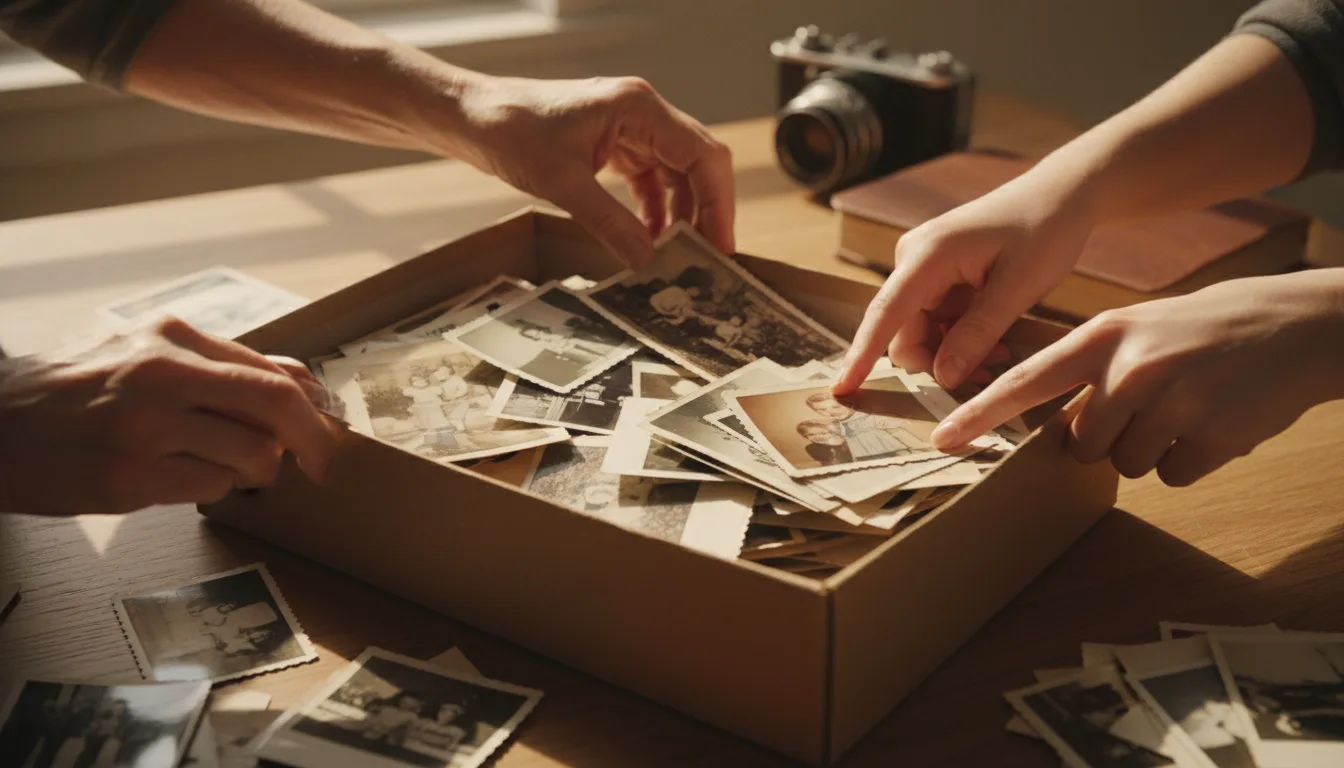
Photos are chemical objects, and heat, light, and moisture are their enemies. A few simple storage choices can add decades to a print's life.
The three enemies: heat, light, moisture
Photographs fade and deteriorate fastest when exposed to:
- Heat — accelerates the chemical breakdown of dyes.
- Light — especially direct sun and UV, which bleaches color.
- Moisture — causes staining, mold, and prints sticking together.
Control these three and you dramatically slow aging.
Where and how to store prints
- Choose a stable, interior space. A cool, dark closet beats an attic, basement, or garage, where conditions swing wildly.
- Use archival materials. Store prints in acid-free, lignin-free boxes, sleeves, or albums. Avoid old “magnetic” sticky-page albums and PVC plastics, which damage photos over time.
- Keep them flat and separated. Prevent scratching and sticking; don’t cram prints loosely together.
- Handle by the edges with clean, dry hands.
Digitize so you can stop handling the originals
The best way to preserve a fragile print is to not handle it — and you don’t have to once it’s digitized. Scan your photos, restore the copies, and enjoy, share, and animate the digital versions while the originals rest safely in storage. Pair this with a solid backup routine and your memories are protected on every front.