
Memories · Loved ones
Preserving the memory of someone you love
When someone matters to us — here or gone — their photographs stop being pictures and become holdings. This page is about caring for those holdings: gently, practically, and at whatever pace is right for you.
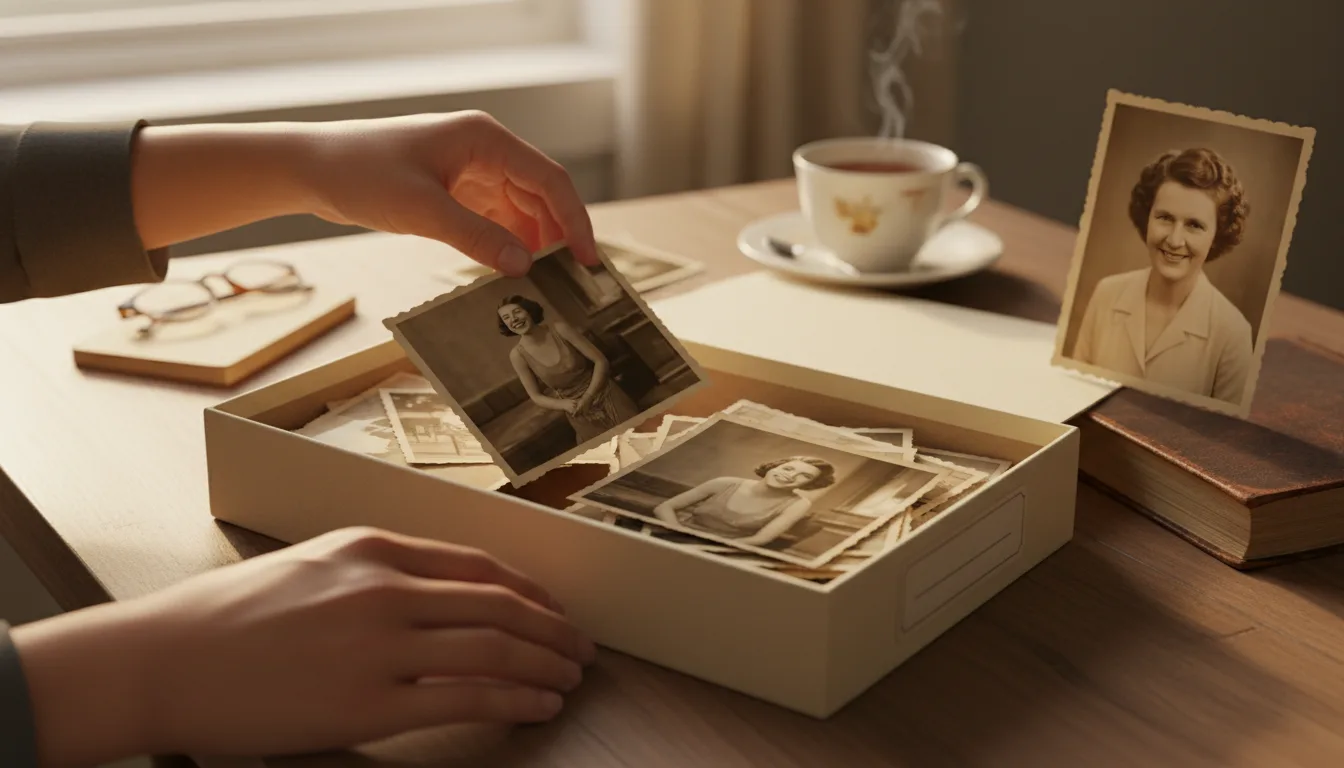
Preserving a loved one's memory through photographs has practical steps — gathering, digitizing, restoring — and personal ones, like deciding what to make from them, and when. Here's the full picture, with no rush attached.
Why photographs carry so much of this
When someone is gone — or when we simply fear the day — their photographs change category. They become the primary physical evidence of a face, a posture, a way of laughing that memory alone holds imperfectly. Caring for them is therefore not a hobby task; it’s stewardship of the actual remembering. That’s why the practical steps here (gather, digitize, restore) matter beyond tidiness: each one makes the remembering more durable and more shareable.
We make no larger claims than that. Restored photographs and gentle videos don’t resolve grief and aren’t meant to — they simply keep the face present, clear, and passable to the next generation, which is what photographs were always for.
The archive is the achievement
If you take one thing from this page: the finished state isn’t a video or a framed wall — it’s a secured archive. Every photo of them, gathered, digitized, backed up, the damaged ones repaired free, the stories written down. From that foundation, anything can be made at any time — a tribute, a memorial video, prints for every household. And if nothing is ever made, the archive itself already did the essential work: it made sure they stay findable.
How it works
- 1Gather without judging. Collect every photo of them from relatives, albums, and phones into one place. Volume first, curation later.
- 2Digitize and back up. The irreplaceable should never exist in one copy — simple backup approaches.
- 3Restore the damaged ones — free. Fading and creases repaired; their face clear again.
- 4Make something, when it feels right. A framed restored print, a shared album, or a gentle video — or simply the archive itself, safe.
Preservation is care made visible
Organizing and restoring someone's photographs is a concrete way to honor them — useful precisely because it gives the feeling something to do.
Every step is optional except the first
Gather and digitize; that secures everything. Restoration, sharing, and video-making can follow in months or years — credits never expire, and neither does the archive.
Shareable comfort
A restored photo sent to a sibling, a small video at an anniversary — preserved memories are most comforting when they circulate.
One family's pace
After losing their father, three siblings divided the work without planning to: the eldest gathered every photo into a shared folder within a month; the middle one quietly restored the faded ones over the winter — free, a few each evening; and a year later, on his birthday, the youngest assembled ten of them into a short video with his favorite jazz. Each step happened when someone was ready, and each helped a different person differently.
A hypothetical account of a pattern many families will recognize.
Tips for the best result
- Ask relatives for their photos of the person early — phones and drawers hold images you've never seen, and asking invites stories.
- Restore the photo you love most first; seeing their face clear again tends to steady the whole project.
- Write down what you know — names, dates, the story behind a photo — while it's fresh. Memory preserves poorly unassisted.
- There is no schedule. An archive gathered now can become a video in five years, or never, and both are fine.
- For anniversaries and gatherings, a single restored photo can be enough — meaning doesn't require production.