
Restore · Polaroids
Restore faded Polaroid photos
Instant photos were never meant to last — the developing chemistry stays in the print, quietly eating it for decades. If your Polaroids have gone yellow-brown and ghostly, the image is still in there. Free restoration gets it out.
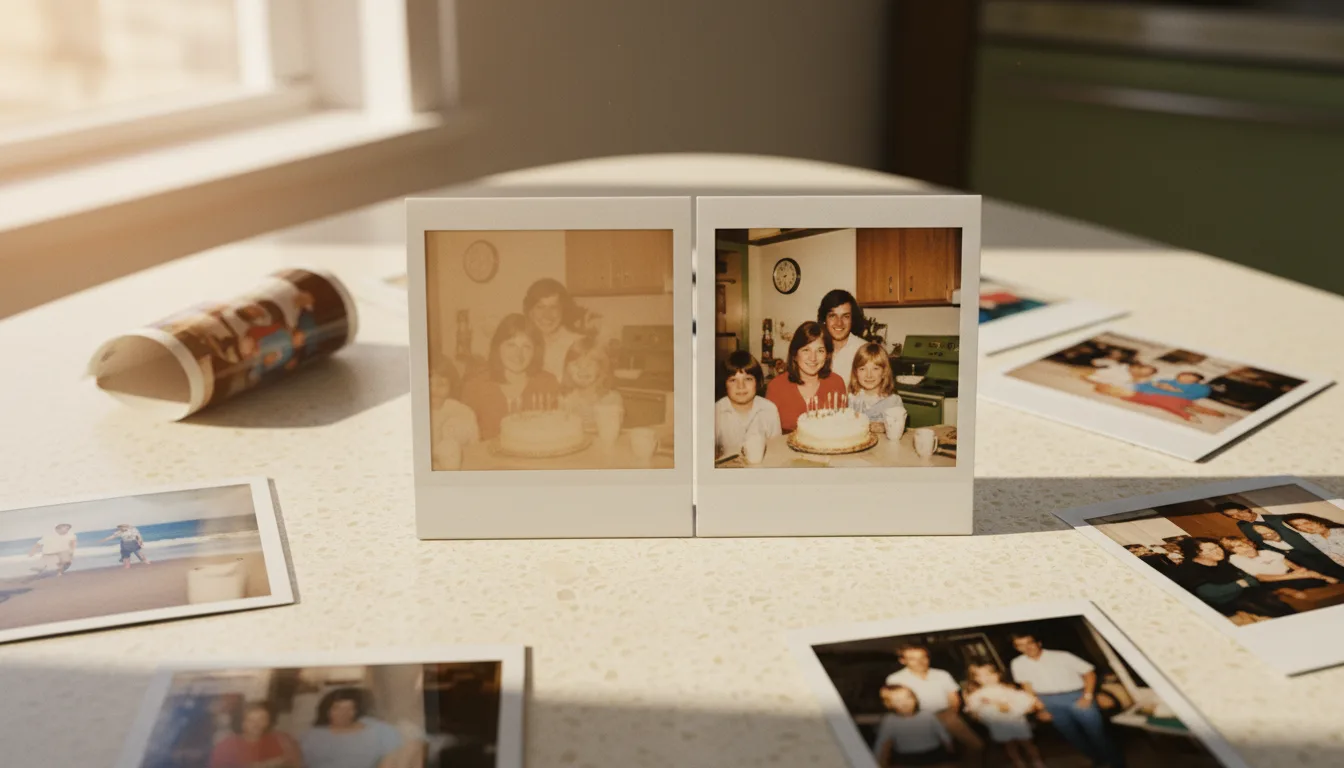
The Polaroid's magic — the picture developing in your hand — is also its curse: the chemistry never fully stops. Fifty years on, instant photos are the fastest-fading format in the family archive, and among the most emotionally loaded.
The format that photographed real life
Regular film had ceremony: you composed, you rationed the roll, you waited a week for prints. The Polaroid abolished all of it — and in doing so became the only camera pointed at ordinary life. The archive it left behind is unlike any other: unposed kitchens, actual parties, the couch as it really was, people laughing rather than arranging themselves. When families say the feel of an era lives in the Polaroid box, they’re being literal.
Which makes the format’s built-in decay a genuine archival emergency. The ceremonial photos exist in negatives and lab prints; the Polaroid moment exists once, on chemistry that is still slowly processing itself toward blank.
Triage, then treasure
The workflow for a Polaroid box: scan everything now (the format’s deterioration doesn’t wait for your shortlist), let free restoration run on the lot, then choose. The strongest recoveries become reprints and gift videos; the family’s candid history — finally in stable, restored form — becomes whatever the next reunion needs. The chemistry got a fifty-year head start; the fix takes an evening.
How it works
- 1Scan the Polaroids now. This format is actively deteriorating — digitize before restoring. How to scan.
- 2Restore free. The yellow-brown cast lifts, contrast returns, and the instant-photo softness sharpens to natural.
- 3Keep the frame if you love it. The white border is the format's signature — crop or keep, your call.
- 4Animate the keepers. A restored 1978 Polaroid, gently moving, is peak nostalgia.
Tuned for instant-film failure
Polaroid fading is chemically distinctive — the amber shift, the crushed shadows, the milky highlights. Restoration reads and reverses the pattern.
The candid archive
Polaroids captured what film cameras didn't: parties, kitchens, bad haircuts, real life. Rescuing them rescues the family's candid history.
Era intact
Restoration recovers the image without erasing the 70s-80s character — your Polaroids come back as good Polaroids, not as digital photos.
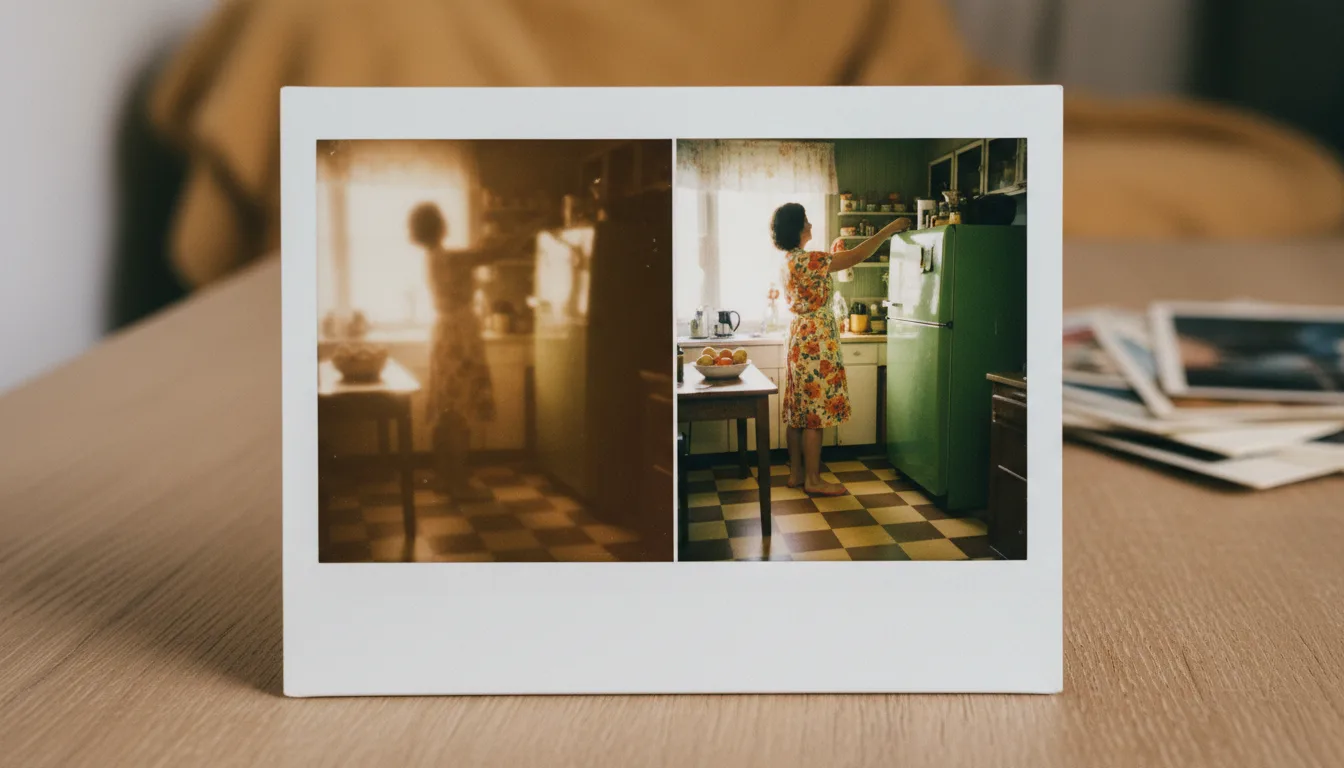
Example: the party box
Imagine a shoebox labeled '1977–1984' — a hundred Polaroids of parties, babies, and backyards, most gone amber, some nearly blank. Scanned in an evening and restored free, roughly eighty come back strong: the kitchen's actual wallpaper, the actual color of the terrible couch, faces mid-laugh at parties nobody photographed 'properly.' The best ten become an animated slideshow for the next family gathering, white borders and all.
Hypothetical batch — recovery rates vary with how far gone each print is.
Tips for the best result
- Prioritize Polaroids over every other format when digitizing — they're degrading fastest.
- Never cut a Polaroid open or peel its layers; scan it as-is.
- Scan at high resolution — instant prints are small, and detail recovery needs pixels. Guide.
- Store originals cool, dark, and flat after scanning; heat accelerates the chemistry.
- Keep the white border in gift videos — it instantly signals the era.