
Colorize · Historical
Colorize historical photos
The past wasn't monochrome — the film was. Colorizing a historical photograph returns what the camera couldn't record: the brick was red, the fields were green, and the people lived in a world exactly as vivid as yours.
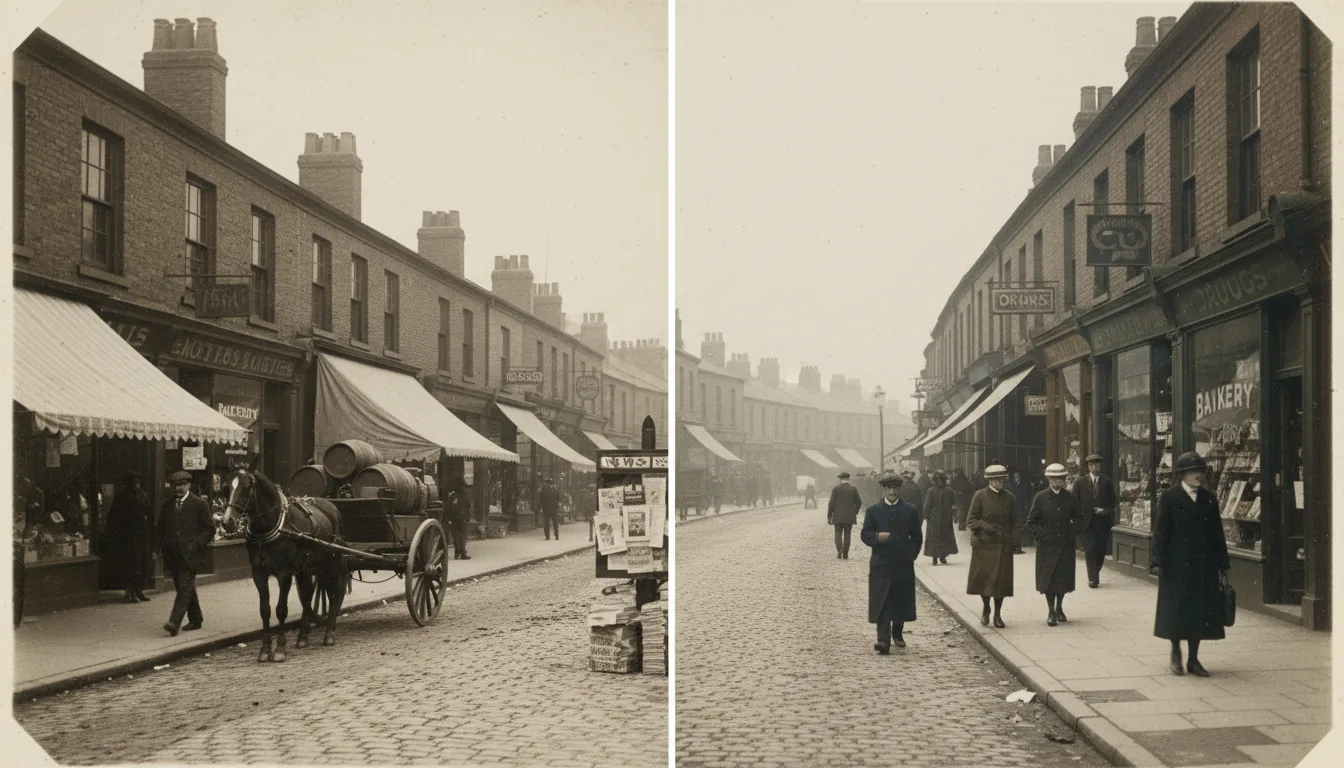
Historical colorization is its own discipline: the colors must be plausible for the period — uniforms, fabrics, storefronts, light — or the result reads as costume. Here's how FotoRipple approaches it, and where the honest limits lie.
What color does to historical distance
Monochrome is a filter we mistake for a fact. Generations raised on black-and-white archives unconsciously file the past as a gray place — solemn, other, finished. Colorization corrects the record’s feel: the 1920s street fills with painted signs and colored coats, and the viewer’s brain quietly re-shelves the scene from “history” to “somewhere I could stand.”
That power is why care matters. A wrong-colored uniform or an anachronistic palette doesn’t just err — it teaches the error. FotoRipple aims its colorization at the believable middle: muted, period-consistent, honest about being reconstruction.
Family archives are where this matters most
Public archives have professional colorizers; your family’s historical layer has you. The emigration portrait, the homestead, the shop — restored and colorized free, these become the images that make younger relatives ask. And when asking isn’t enough, the colorized portrait is one step from taking a breath.
How it works
- 1Start with the best scan of the historical print or archival image you have rights to use.
- 2Restore first — free. Period damage (foxing, silvering, fade) is removed so color lands on clean detail.
- 3Colorize — free. Skin, textiles, foliage, and sky receive natural, era-plausible tones.
- 4Optionally animate. A colorized historical portrait, gently moving, is the full time-machine.
Plausibility over spectacle
The aim is color you'd believe, not color that shouts. Muted period palettes, honest skin tones, light that matches the era's world.
Family-scale history included
The same care applies to your own archive's oldest layer — the emigration portraits and farmstead photos are historical documents too.
Free means comparable
Colorization costs nothing, so you can generate the color version, set it beside the monochrome original, and decide which tells the truth better.
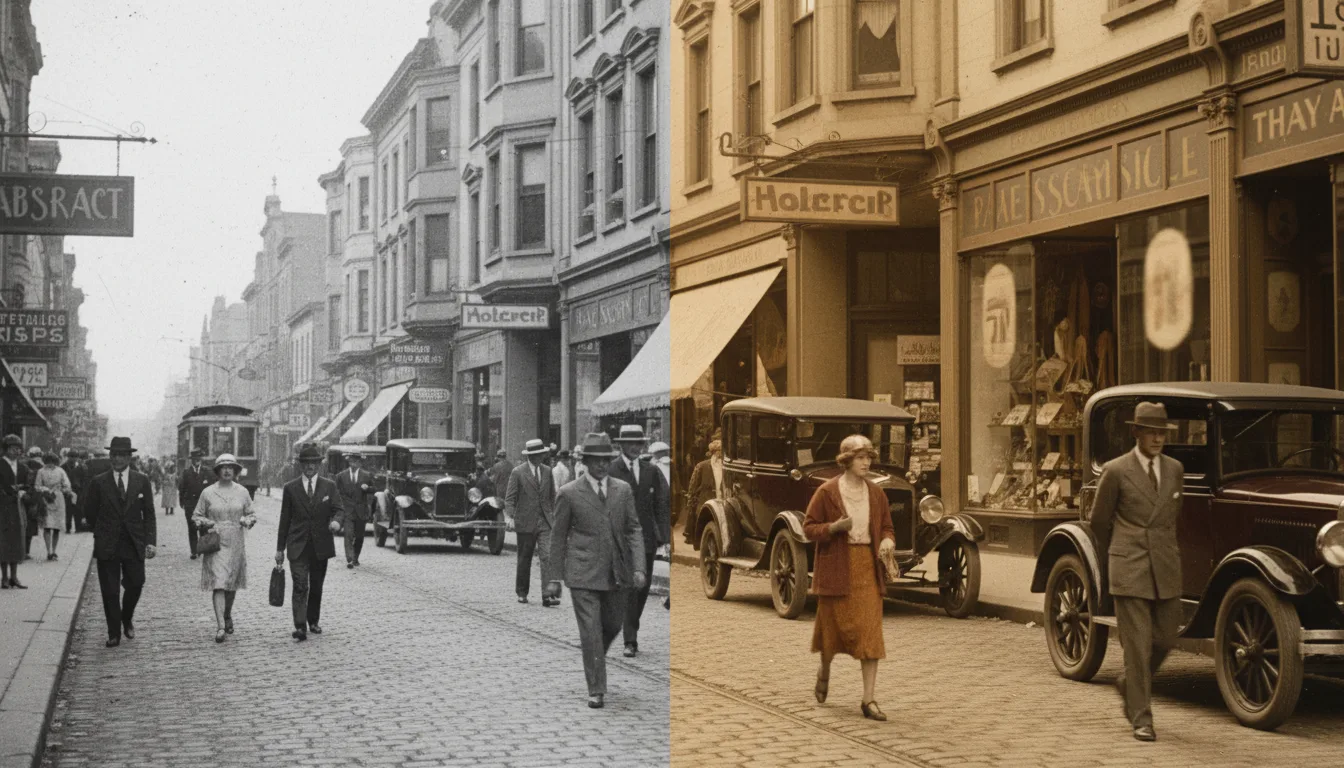
Example: the storefront, 1921
Imagine a family photo of the shop your great-grandparents ran: monochrome, the sign half-faded, four figures in the doorway. Colorized, the awning turns forest green, the dresses prove to be florals, and — the detail that undoes everyone — the youngest child's hair is unmistakably red, like your daughter's. The photo stops being 'the old shop' and becomes Tuesday morning, 1921.
Hypothetical example; AI color is plausible reconstruction, not a historical record — the hair might really have been auburn.
Tips for the best result
- Restore before colorizing, always — color amplifies whatever detail or damage it lands on.
- Check colorized details against known facts (uniform colors, family memory, local history) before presenting results as documentary.
- For solemn subjects, evaluate the monochrome and color versions side by side; gravity sometimes lives in grayscale.
- Colorizing an archive? Batch it — the free step scales to the whole collection.
- Add sources and dates when sharing publicly; context is what separates history from aesthetics.