
Animate · Historical
Animate historical photographs
A historical photograph holds people who never expected to be seen again. Animating one — gently, respectfully — closes a century in a breath: the 1910s factory worker glances up, and history has a face.
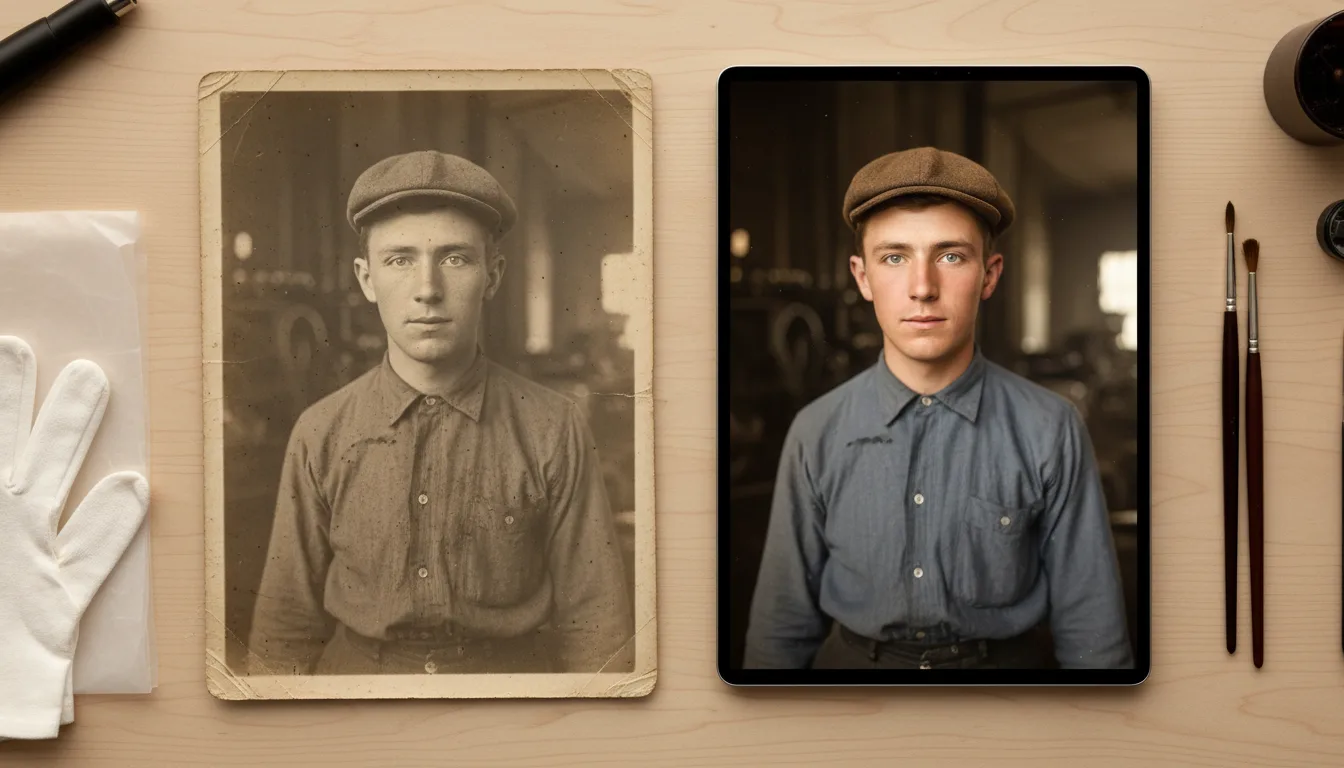
Whether it's your own family's archival photos or public-domain images for a project, animating historical photographs demands two things: technical care with fragile sources, and taste about when motion honors the subject.
Why moving history moves people
Historical empathy has a rendering problem: we know intellectually that the people in old photographs were as alive as we are, but the stillness, the monochrome, and the damage all whisper artifact, not person. Restoration removes the damage; color removes the distance; and motion — even a single blink — removes the last barrier. The viewer’s brain reclassifies the image from “document” to “someone.”
That reclassification is precisely why restraint matters. The goal is presence, not performance. FotoRipple’s animation stays at the level of breath and glance, which for historical material is not a limitation but the correct register.
Family archives are historical archives
Most people’s closest historical photographs are their own: the great-grandparents’ portraits, the emigration-era documents, the farm and factory photos. Everything on this page applies, with one addition — your family photos come with narrators. Animate the ancestors, and pair the clips with whatever the oldest living relatives remember. History with a face and a story is the whole prize.
How it works
- 1Start from the best scan available. For century-old prints, resolution and even light matter — scanning guidance.
- 2Restore free. Silvering, spots, and fading — standard for pre-1950 photographs — are repaired first.
- 3Colorize if it serves the image. Free, period-plausible color; monochrome remains a legitimate choice.
- 4Animate with restraint. A breath, a blink, a slight turn — historical subjects deserve the subtlest setting of all.
Respect as a design principle
FotoRipple's motion is inherently gentle — no exaggeration, no performance. For historical subjects, that restraint is the ethical baseline.
Handles period damage
Emulsion silvering, foxing spots, contrast collapse — the damage patterns of 1890–1950 photography restore free before any motion.
For families and classrooms
Ancestor archives, local-history projects, classroom modules — moving images make historical people legible as people.
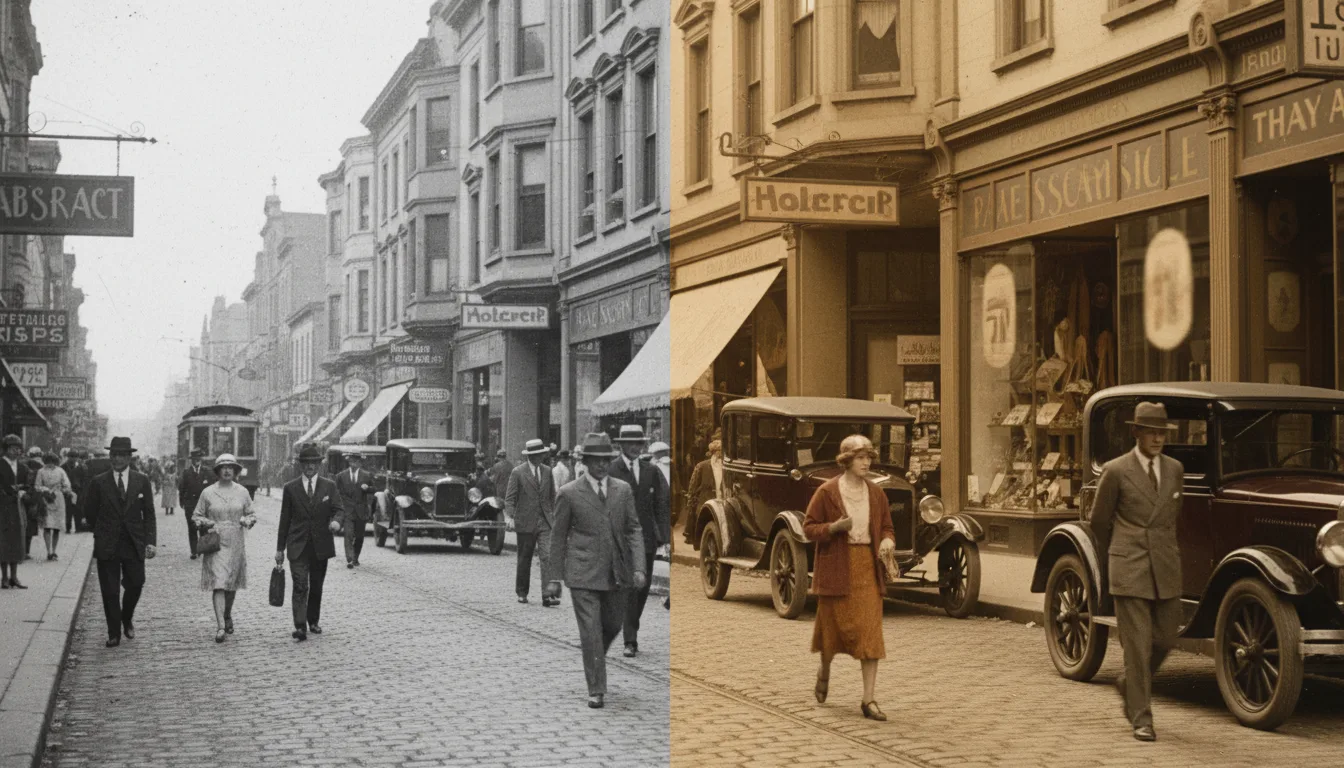
Example: the factory photo in the classroom
Imagine a history teacher preparing a unit on early industrial labor. From a public-domain archive: a 1912 photo of young mill workers. Restored and subtly animated — one boy shifts his weight, another almost smiles — it opens the lesson. The class that yawns at documents leans in at faces. Discussion follows about who these boys were, which was the entire point.
Hypothetical classroom use; check the licensing of any archival image you use, and handle depictions of real historical people with care.
Tips for the best result
- Verify rights before animating archival images that aren't your family's — public domain and licensed sources only.
- Restore first, always: motion applied over damage amplifies the damage.
- Consider monochrome animation for solemn subjects; color plus motion isn't always the respectful maximum.
- Caption historical clips with names and dates when sharing — animated history should inform, not just impress.
- Family archival photos? The ancestors page covers the genealogical angle.