
Memories · Grandchildren
Help your grandchildren meet the family they never knew
You can hand a ten-year-old an album and watch them be polite for ninety seconds. Or you can show them their great-great-grandmother take a breath and smile — and watch the questions start.
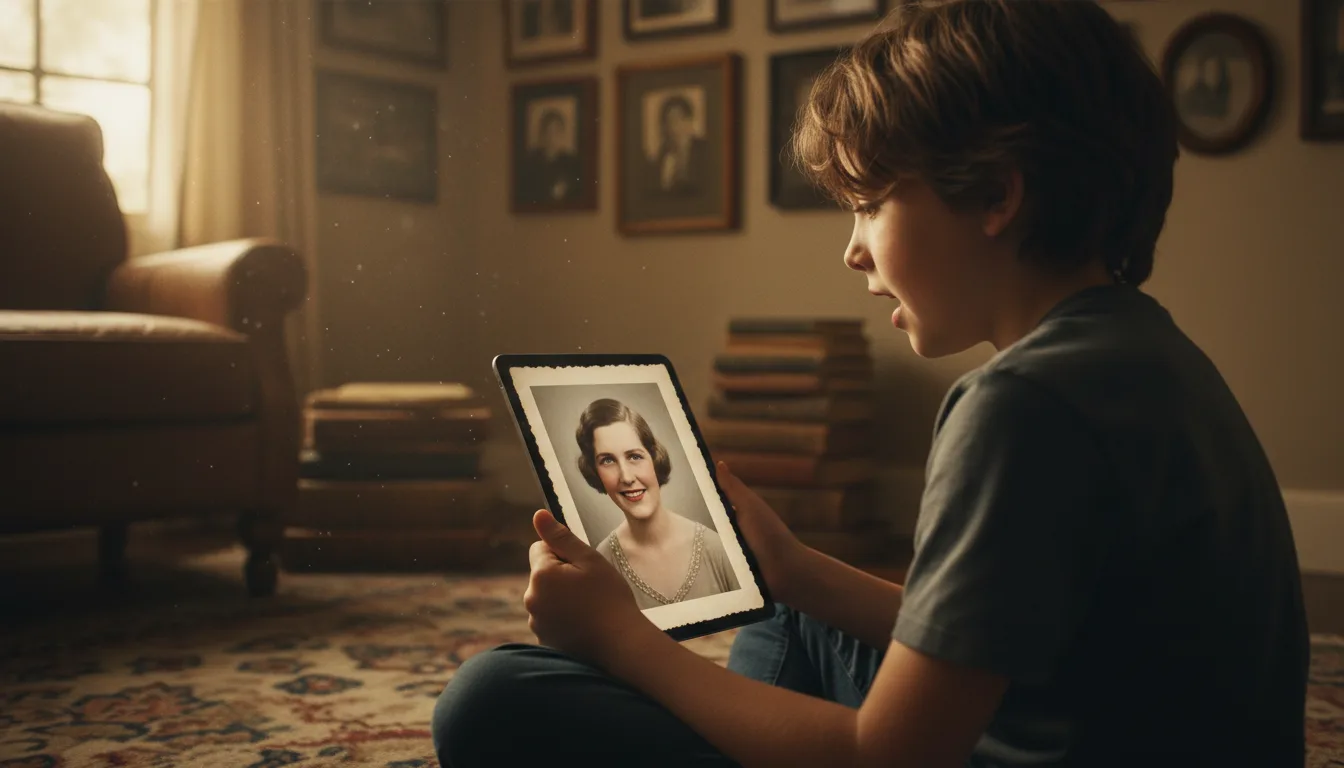
Passing family history down has always depended on the format of the moment — the told story, the album, the slide carousel. For screen-native grandchildren, the format that works is short video. Fortunately, that's makeable from the album.
The inheritance problem
Family history dies at the hand-off. The generation that knew the stories assumes there’s time; the generation that should receive them is busy; and the photos that could bridge the gap sit in a format — still, monochrome, unlabeled — that reads as homework to a child.
The fix isn’t nagging; it’s packaging. Two minutes of moving, colorized ancestors is packaging a child accepts. It doesn’t replace the stories — it causes the request for them, which is the step families usually never reach.
For the grandparent doing this
You’re the one holding both halves: the photos and the knowledge of who’s in them. The workflow is genuinely simple — upload, restore free, animate — and testimonials suggest even skeptics of “an AI” (as Lucas from Brazil put it before being converted) find the result carries real emotion. If the technology feels daunting, recruit the middle generation to drive; making it together is its own hand-off.
How it works
- 1Choose the ancestors worth meeting. 3–10 photos: the founders, the characters, the ones with stories.
- 2Restore and colorize free. Color matters extra here — it makes ancestors look like people, not history.
- 3Animate. A blink and a smile from 1935 does what no caption can.
- 4Watch it together. The video is the opener; your stories are the actual inheritance.
Attention, converted
Children give moving faces the attention they can't give still ones. The animation earns the two minutes; the stories fill them.
Color closes the distance
To a child, black-and-white means 'not real.' Free colorization makes 1935 look like somewhere a person could live.
A story-prompt machine
Every clip ends in a question. Keep the answers ready — or record yourself telling them as the real heirloom.
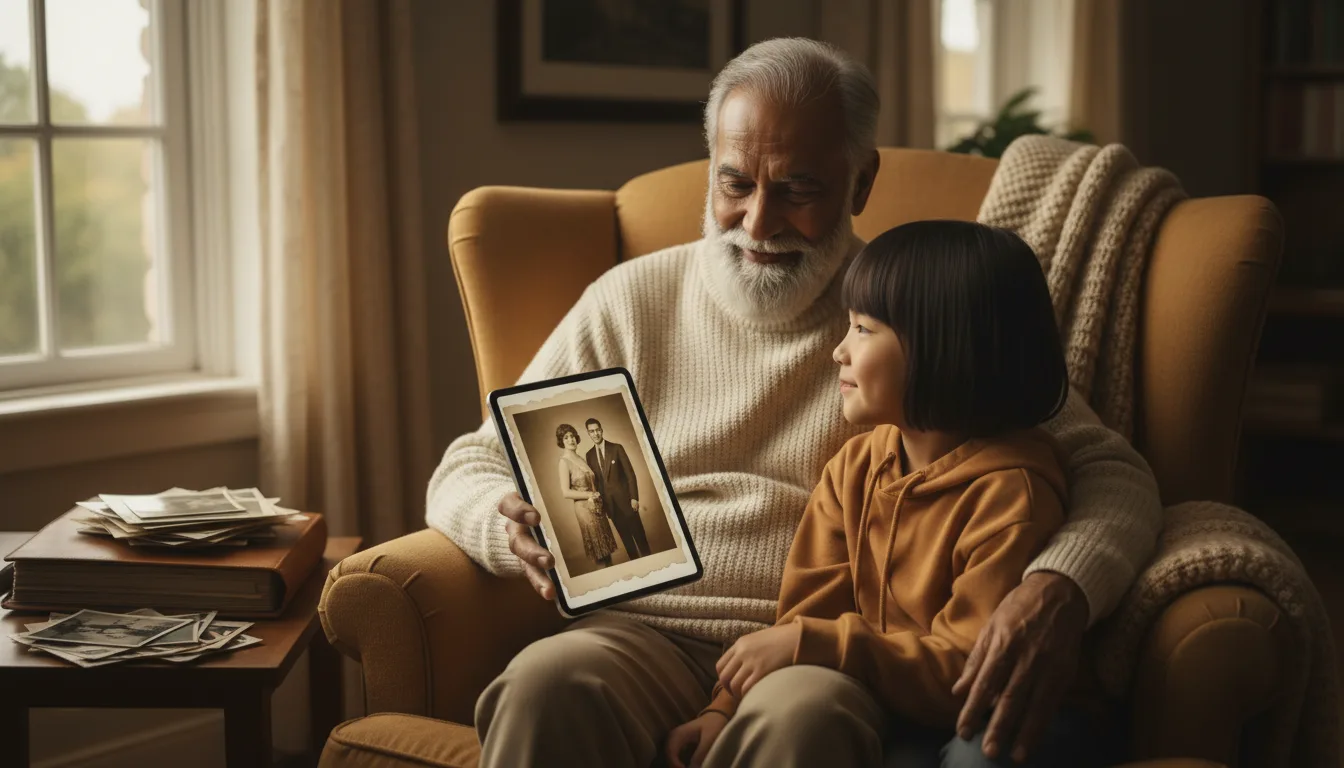
Example: the rainy Sunday screening
Imagine a grandmother with visiting grandchildren, ages 7 and 10, attention spans fully modern. After lunch she casts a two-minute video: six ancestors, restored and moving, ending with a photo of the kids themselves. The 10-year-old asks to see the sailor again. The 7-year-old wants to know if the baby in 1948 is really Daddy. Forty minutes of family stories follow — initiated, for once, by the children.
Hypothetical scene — it's the pattern this format reliably produces.
Tips for the best result
- End the video with the grandchildren's own photos — seeing themselves in the lineage is the hook.
- Keep it under three minutes; leave them wanting the sequel.
- Pick ancestors with tellable stories over important-but-dull ones. Characters beat patriarchs.
- Let the kids press play themselves; on their device, it's their content.
- Consider one video per family branch — cousins love comparing theirs.